Black Sea Drone Attacks Leave at Least 30 Mariners Dead or Missing
By NGN News English | November 3, 2026
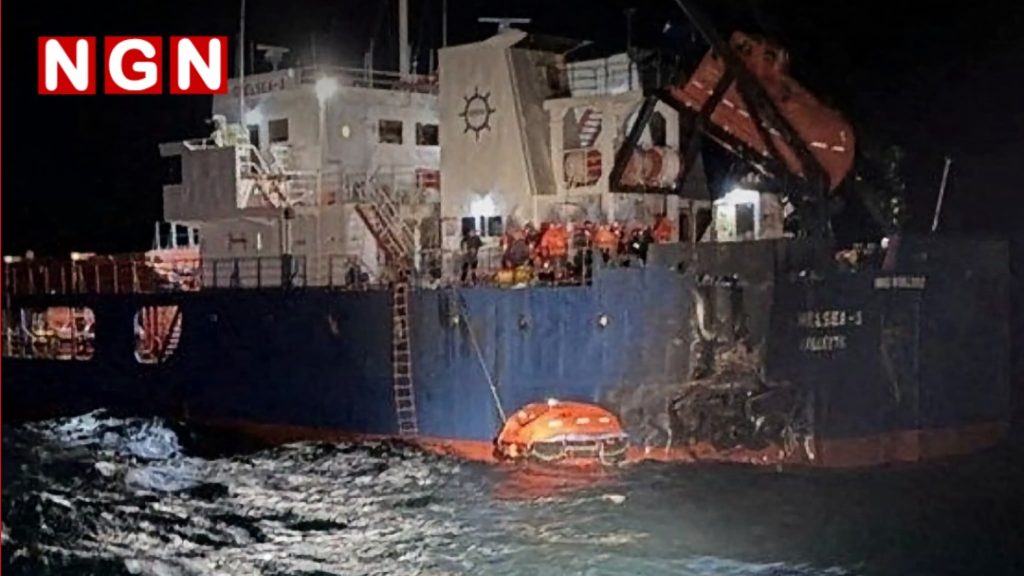
WASHINGTON — A growing wave of drone attacks on merchant ships in the Black Sea has killed or left missing at least 30 mariners in recent weeks, raising serious concerns about civilian shipping, regional security and global food supplies.
According to a CNN investigation, at least a dozen merchant vessels have been struck during the recent escalation. The attacks have affected ships operating near the coastlines of NATO members Romania and Bulgaria, bringing the conflict’s maritime dangers closer to alliance territory.
The reported attacks have involved both aerial and naval drones. Some vessels were reportedly targeted near Ukrainian export routes, while others were struck in or close to the exclusive economic zones of Romania and Bulgaria.
One of the deadliest incidents involved the Turkish-owned cargo vessel Alfa Watan, which was struck by drones in early October while travelling from Egypt toward Romania. Nine Syrian crew members and one Egyptian national reportedly died.
Six days later, the merchant ship HS Dignity was attacked near the Bulgarian coast. Eleven crew members were reported missing after the vessel sank. The majority of its crew were Syrian nationals.
Another incident on October 15 involved several merchant ships, including the chemical tanker Wine Trader, which caught fire after being hit near the Sulina Canal. Romanian officials reported eight deaths in attacks on merchant vessels that day.
The recent incidents have also raised concerns about the safety of shipping routes near NATO territory. On October 28, three naval drones struck the container ship Contship Jet in Bulgaria’s Black Sea exclusive economic zone. The vessel later sank, but all 18 crew members were rescued, according to Bulgarian authorities and Reuters.
The identity of those responsible for individual attacks has not been independently established in every case. Ukraine has blamed Russia for the wider campaign, while Moscow has not acknowledged all the incidents and has denied involvement in some attacks.
The consequences extend beyond the shipping industry. Ukraine relies heavily on Black Sea routes to export agricultural products, including wheat, corn and sunflower oil. Disruptions to these routes could affect international food supplies and increase transportation and insurance costs.
Maritime security analysts have warned that commercial vessels operating in the region face growing risks. Insurance providers have expanded high-risk classifications for parts of the Black Sea, while shipping companies are reassessing their operations.
Romania and Bulgaria have begun strengthening surveillance and maritime security measures. Bulgaria has sought additional NATO assistance, while Romania has increased coastal air patrols and efforts to improve its ability to detect and counter drones.
NATO has also said it has strengthened its posture along its eastern flank.
The growing number of attacks has turned the Black Sea into an increasingly dangerous route for civilian shipping. With investigations continuing and tensions between Russia and Ukraine unresolved, the safety of international crews and the future of vital trade routes remain major concerns.
NGN News English