
Israel’s Election Rhetoric: What Candidates Said, and How They Performed
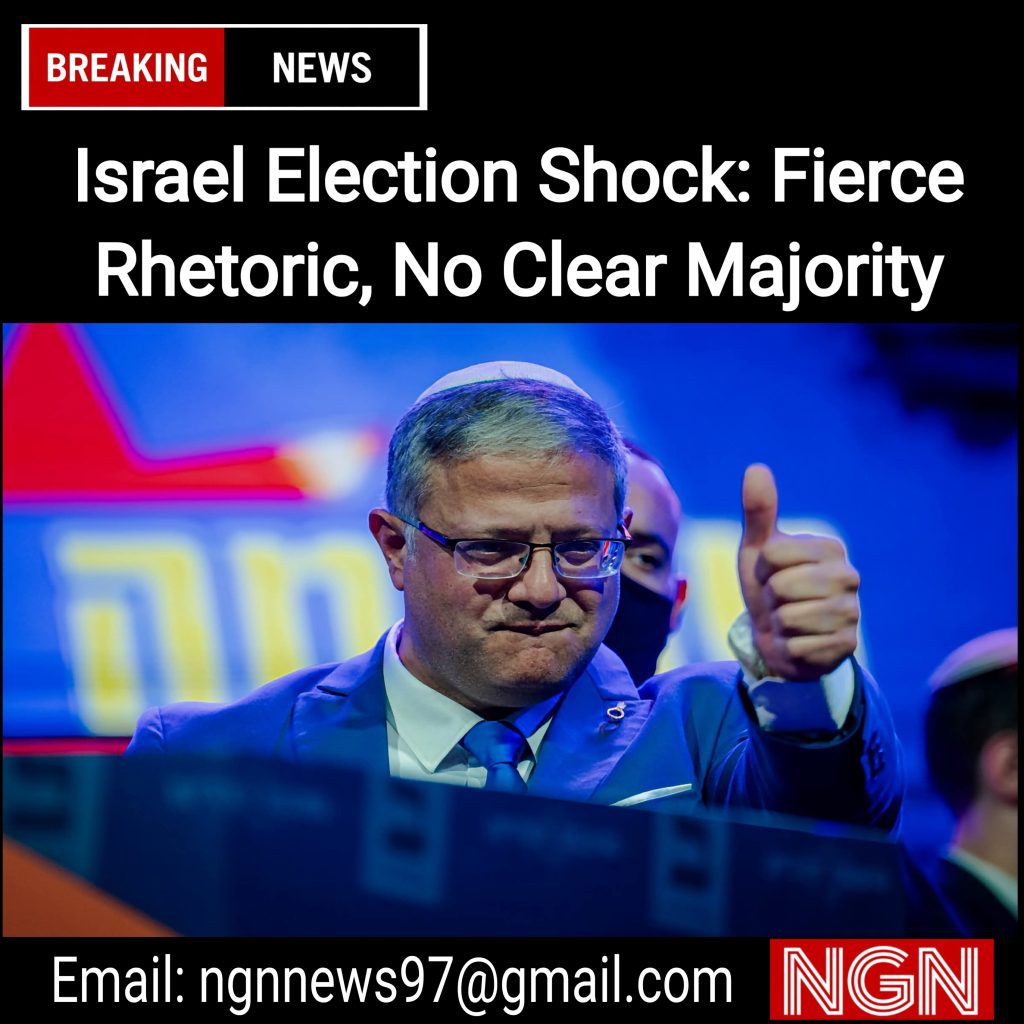
JERUSALEM, October 29, 2026 — Israel’s October 27 parliamentary election has left the country facing another period of political uncertainty. Campaign promises, warnings about national security and sharp attacks on political rivals dominated the race, but preliminary results show that neither major political bloc has secured the 61 seats needed for a majority in the 120-member Knesset.
With nearly 93% of votes counted, Prime Minister Benjamin Netanyahu’s right-wing and religious bloc was projected to win 53 seats, compared with 48 for the opposition bloc led by Gadi Eisenkot. Arab-led parties were projected to win 19 seats, potentially giving them a decisive role in negotiations over the next government.
Benjamin Netanyahu: Security and a right-wing government
Netanyahu’s campaign emphasized Israel’s security challenges, military operations and the threat he says Iran poses to the country. He urged voters to support a strong right-wing government and argued that Israel had an opportunity to address what he described as the Iranian threat.
During the campaign and after voting, Netanyahu also warned against a government dependent on Arab-led parties. His Likud party emerged as the largest individual party in the preliminary count, but its wider political bloc remained short of a parliamentary majority.
After the vote, Netanyahu’s party alleged that Arab parties had benefited from election fraud. The allegations had not been substantiated by evidence establishing systematic election fraud, and election officials were examining specific reported incidents. The claims and their political implications remained contested.
Gadi Eisenkot: A challenge to Netanyahu’s leadership
Opposition leader Gadi Eisenkot presented the election as an opportunity for a change in leadership. His campaign criticized Netanyahu’s handling of the security failures surrounding the Hamas-led attacks of October 7, 2023, and called for accountability and changes in governance.
Eisenkot’s bloc was projected to win 48 seats. Although parties opposed to Netanyahu collectively had significant support, their path to forming a government remained complicated by disagreements over whether they could cooperate with Arab-led parties.
Naftali Bennett and other political contenders
Former prime minister Naftali Bennett campaigned on forming a different government and replacing Netanyahu’s leadership. His party was projected to win around 12 seats, giving it potential importance in any attempt to assemble a coalition.
Other political figures, including Itamar Ben-Gvir and Bezalel Smotrich, campaigned on hard-line nationalist positions. Ben-Gvir’s party was projected to win seven seats, while Smotrich’s Religious Zionism party was projected to win six. Both fell short of the ambitions expressed during the campaign.
Arab-led parties make significant gains
One of the election’s most consequential developments was the projected increase in representation for Arab-led parties. The Joint List and Ra’am were together expected to secure 19 seats, a historic high according to preliminary reporting.
Joint List leader Yousef Jabareen called for Jewish-Arab partnership, presenting cooperation as an alternative to what he described as politics based on exclusion. Ra’am leader Mansour Abbas, meanwhile, criticized Netanyahu’s statements about Arab voters, arguing that they were intended to mobilize right-wing support.
Despite their gains, Arab-led parties face political resistance from several Jewish-led factions. Their seats could influence coalition negotiations, but their participation in a future government is not guaranteed.
What the results mean
Israel’s parliamentary system requires a governing coalition capable of commanding the support of at least 61 members of the Knesset. Neither of the two principal blocs reached that threshold in the preliminary results.
Netanyahu may seek support from opposition lawmakers or attempt to form a broader unity government. Eisenkot’s bloc would need cooperation from Arab-led parties or another political arrangement to reach a majority. If negotiations fail, the country could face another election.
The election therefore produced no straightforward mandate for either side. The final outcome will depend on the official vote count, the president’s consultations with political parties and negotiations over a coalition.
Campaign rhetoric versus electoral performance
The results show a gap between some candidates’ campaign ambitions and their projected seat totals. Netanyahu’s bloc remained the largest of the two main groupings but lost its previous parliamentary majority. Eisenkot’s opposition also fell short of the seats needed to govern independently, while Arab-led parties gained greater potential influence.
Statements made during a campaign reflect candidates’ political positions and strategies; they do not, by themselves, establish voter motives or determine how a coalition will ultimately be formed. The next stage of Israel’s political process will be shaped by official results and negotiations among the parties.
Sources and further reading
- Al Jazeera — Israel’s election rhetoric: What candidates said, and how they performed
- Reuters — Israel’s election leaves Netanyahu with a path to keep power
- Reuters — Netanyahu steps up attacks on Arab parties amid coalition uncertainty
- Associated Press — Takeaways from Israel’s inconclusive election
Stay with NGN News English for factual coverage of Israel, the Middle East and major global political developments. We will share further verified updates as official results and coalition negotiations progress.